
One-on-one biology and chemistry tutoring with me, Nico — regular, honors and the AP sciences. Most science trouble isn't a memory problem; it's what happens when facts arrive without the mechanism underneath them. We learn the system first — why the reaction goes, what the cell structure is for — and the vocabulary starts sticking on its own. The goal is a student who can explain it back, not just recognize it on a test.
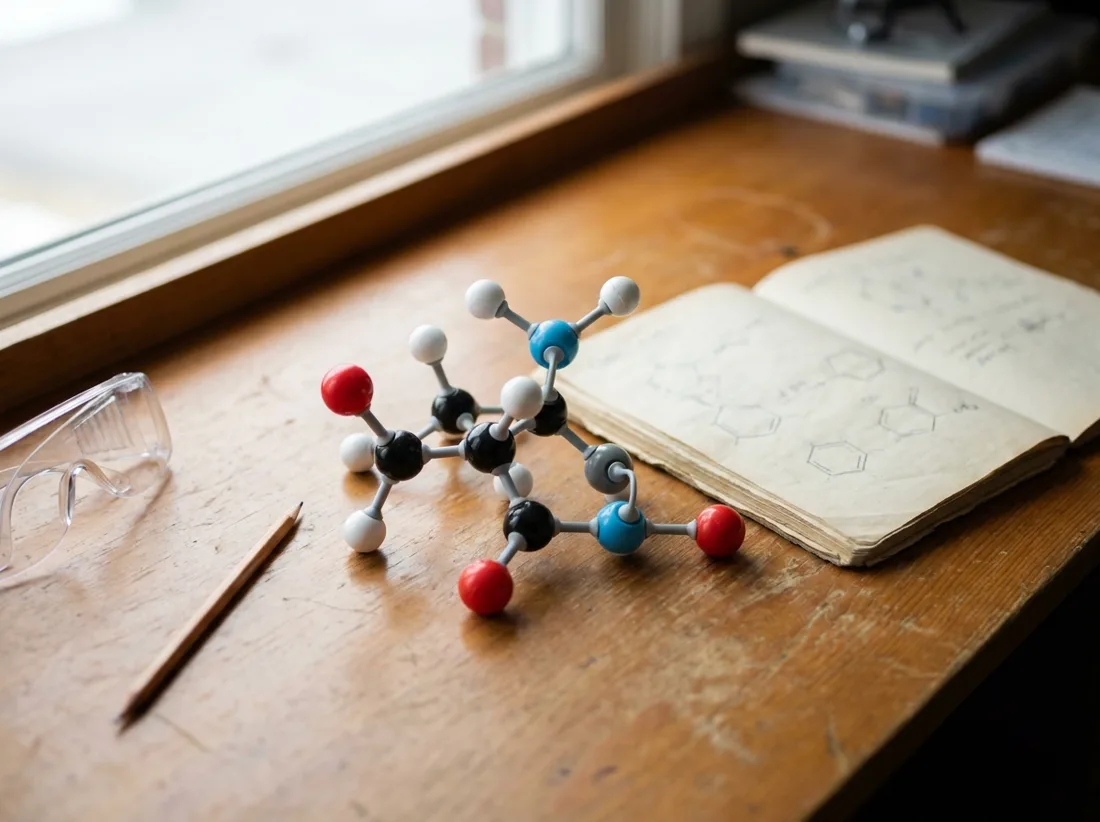
Biology and chemistry get taught as vocabulary avalanches — hundreds of terms a semester, quizzed weekly. But underneath, each course is a handful of systems that repeat: energy, structure, reactions, equilibrium.
Students who learn the systems stop cramming, because the facts finally have somewhere to live. That's the whole method: mechanism first, vocabulary second — and the math handled in the same session.
Why does the reaction happen? What is that organelle for? A student who can answer why recognizes every version of the question on test day.
Stoichiometry, gas laws, genetics ratios — half of chemistry trouble is really algebra trouble. I tutor the math too, so nothing gets skipped over along the way.
Data tables, honest graphs, and a conclusion that says what the numbers showed — coached by a tutor with an English degree.
Two skills decide science grades: understanding the system, and showing that understanding in a timed environment.
Sessions run on the principle of "what should happen if…" A student who predicts the outcome correctly understands the mechanism behind it.
Energy, structure, equilibrium — once the comprehension of the system is solid, the terms attach to something concrete.
Sessions track your student's actual class and ramp up before tests — with a written note home after every session.
tap what you need help with ↓
Physics has its own page — same tutor, deeper dive — and the math underneath every science course is covered in the same session. No handoffs.
Biology and chemistry at every level — regular, honors, AP Biology, AP Chemistry and AP Environmental Science.
Physics is its own practice area with its own page, taught by the same tutor — so a student can move through all three sciences without a handoff.
Yes — vocabulary overload is the symptom of learning facts without the system underneath.
We build comprehension of the mechanism first: once a student can explain why a reaction happens or what a cell structure is for, the terms stick without so much reliance on flashcards.
About half the time, yes — stoichiometry, gas laws and equilibrium are algebra wearing a lab coat.
I tutor the math too, so the actual gap gets fixed in the same session instead of dragged along.
One-on-one at your home or online, evenings until 9 PM, synced to your student's actual course.
Sessions blend current homework with the mechanism underneath it, and you get a written note from me after every session.